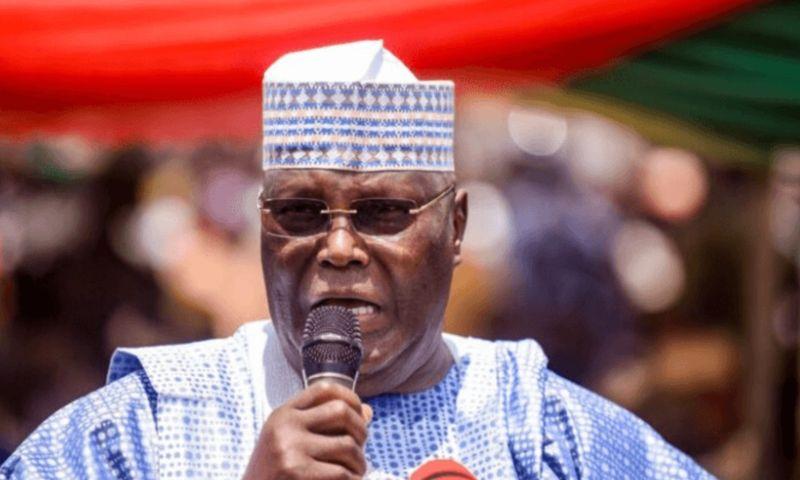
- Atiku accused the Tinubu administration of reckless borrowing and poor economic management
- He linked Nigeria’s rising debt to worsening hardship, insecurity, and food shortages
- The former vice president urged responsible borrowing tied to productivity and development outcomes
Former Vice President Atiku Abubakar has criticised the administration of President Bola Ahmed Tinubu over its defence of Nigeria’s rising debt profile, accusing the government of “reckless borrowing” while citizens grapple with worsening economic hardship and insecurity.
In a statement issued by his spokesperson, Phrank Shaibu, Atiku said the present administration has continued to “glorify” debt accumulation despite widespread concerns about its sustainability and impact on ordinary Nigerians.
His remarks come amid ongoing debate over Nigeria’s growing indebtedness, which the Debt Management Office reportedly places at around ₦154 trillion. The controversy has been further fuelled by recent international developments, including the World Bank’s cancellation of a $717 million power sector debt owed by Nigeria.
Responding to concerns over the country’s borrowing trend, Presidential spokesperson Bayo Onanuga had argued that Nigeria is not excessively indebted when compared with other African economies such as South Africa and Senegal.
However, Atiku dismissed the comparison, saying it reflects what he described as a “dangerous disconnect” between the government and the lived realities of Nigerians.
“It is both astonishing and insulting that at a time when millions of Nigerians can barely afford one meal a day… the Presidency is celebrating debt figures as though indebtedness itself were an economic achievement,” the statement read.
He further argued that worsening insecurity across the country has compounded economic challenges, particularly in rural areas where farmers are increasingly unable to access their farmlands due to attacks by armed groups.
Across many communities, he said, food production has declined significantly as a result of persistent violence, leading to higher food prices, widespread hunger, malnutrition, and growing public frustration.
Atiku also condemned what he described as the normalisation of insecurity-related risks, alleging that some Nigerians now factor in potential ransom payments in their daily financial planning due to frequent kidnappings.
“In many parts of Nigeria today, travelling by road has become a gamble with death,” he said, adding that rural communities are regularly sacked while citizens live in fear of abductions and violent attacks.
The former vice president accused the government of prioritising image management over decisive governance, while failing to address the root causes of insecurity and economic decline.
He also rejected the administration’s economic justification for borrowing, insisting that responsible debt must translate into tangible improvements in productivity, job creation, infrastructure development, and overall welfare.
“No nation becomes prosperous by borrowing to finance consumption and sustain wasteful lifestyles,” he said, arguing that Nigerians are yet to see any meaningful correlation between the country’s rising debt burden and improvements in their daily lives.
Atiku further alleged that the government is relying on propaganda to divert attention from what he described as policy failures, warning that continued economic strain without corresponding development could deepen public discontent across the country.