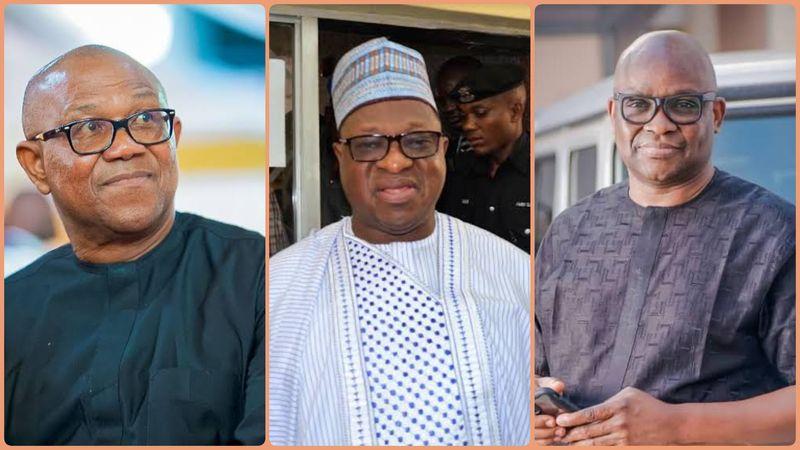
- Impeachment proceedings have been a powerful tool used in Nigerian politics, often to remove governors amid corruption or political crises
- The recent suspension of Rivers State Governor Siminalayi Fubara, coupled with Nigeria's history of gubernatorial impeachments, highlights the ongoing political instability and power struggles within the country's leadership
- TheRadar compiled the cases of six governors who were removed through impeachment below
Impeachment has been a political tool used to remove state governors from office for various reasons, ranging from alleged corruption to misconduct in Nigeria.
The recent suspension of Rivers State Governor Siminalayi Fubara, following a political crisis and the declaration of a state of emergency by President Bola Ahmed Tinubu, exemplifies some of the intense political tensions at state levels.
Had Fubara been impeachedl, he would have joined a list of governors who have faced removal from office through impeachment proceedings.
6 governors who were impeached from office
TheRadar compiled a list of governors who have been impeached over the years below:
1. Murtala Nyako, Adamawa State, 2014
Murtala Nyako was impeached as governor of Adamawa State in 2014 on serious allegations of financial mismanagement. Accused of misappropriating over N17 billion, illegally deducting state workers’ salaries, and misusing local government funds, Nyako’s impeachment followed a political struggle with the state legislature.
In June 2014, both Nyako and his deputy, Bala Ngilari, were served impeachment notices. By July, the state’s lawmakers removed Nyako from office. His impeachment led to the swearing-in of Ahmadu Umaru Fintiri as the acting governor.
2. Joshua Dariye, Plateau State, 2006
Joshua Dariye, the governor of Plateau State, faced impeachment in 2006 due to allegations of money laundering. The impeachment process began in October and he was impeached in November 2006.
Dariye’s deputy, Michael Botmang, succeeded him as governor. However, the Supreme Court eventually reinstated Dariye, though his tenure ended in May 2007. Later, the Economic and Financial Crimes Commission (EFCC) charged Dariye with diverting N1 billion meant for the state's ecological funds.
3. Rashidi Ladoja, Oyo State, 2006
Rashidi Ladoja, who governed Oyo State from 2003 until his impeachment in 2006, found himself removed from office in a politically charged environment. In January 2006, the Oyo State lawmakers impeached Ladoja, forcing him out of office.
Christopher Alao-Akala assumed the governorship in his place. However, Ladoja was reinstated in December 2006 after a court ruling declared his impeachment unlawful.
He served until 2007 and later indicated that his impeachment was due to his opposition to former President Olusegun Obasanjo’s third-term bid.
4. Ayo Fayose, Ekiti State, 2006
Ayo Fayose, elected governor of Ekiti State in 2003, faced impeachment in 2006 due to allegations of mismanagement of state funds, particularly involving the Ekiti State Poultry Project.
A vote by 24 out of 26 lawmakers led to his removal from office. Fayose’s deputy, Biodun Olujimi, was also impeached. The impeachment was later deemed illegal by the Supreme Court, and Fayose was reinstated in 2007.
5. Peter Obi, Anambra State, 2006
Peter Obi, a prominent political figure as the Labour Party's presidential candidate in 2023, was impeached as governor of Anambra State in 2006 after only six months in office.
Obi challenged the impeachment in court and won, with the Court of Appeal ruling that the impeachment was unlawful and he was reinstated on February 9, 2007.
6. Diepreye Alamieyeseigha, Bayelsa State, 2005
Diepreye Alamieyeseigha, the first civilian governor of Bayelsa, who had served as governor since 1999, was impeached in 2005 following allegations of corruption, including embezzlement, abuse of office, and money laundering.
Two years later, he was convicted and sentenced to prison after pleading guilty to several corruption charges.
Rivers’ State of Emergency: 4 other times Nigerian presidents have shut down states and why
Meanwhile, TheRadar earlier reported that President Bola Tinubu declared a state of emergency in Rivers State, invoking Section 305 of Nigeria's 1999 Constitution.
TheRadar highlighted previous presidents who have utilised this provision, alongside the states affected.