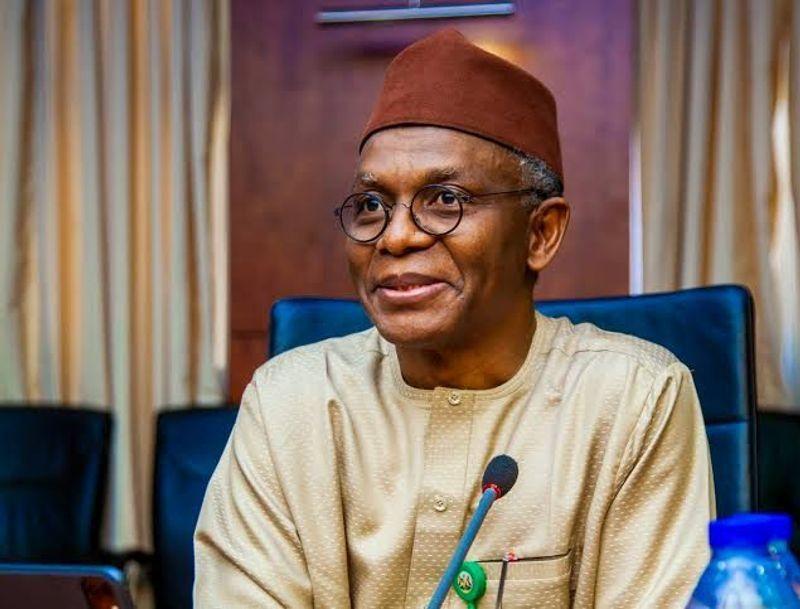
- Former Kaduna State Governor, Nasir El-Rufai, has filed a motion before the Federal High Court seeking to dismiss the criminal charge instituted against him by DSS
- El-Rufai is demanding N2bn compensation, alleging what he termed as “abuse and misuse of the court process”
- The motion reportedly lists 17 grounds, challenging the constitutional validity of the charges, arguing that the alleged offences are not known to law, lack statutory backing, and fail to establish a prima facie case
A former Kaduna State Governor, Nasir El-Rufai, has filed a motion seeking the dismissal of charges brought against him by the Department of State Services, describing the suit as incompetent and a gross abuse of court process.
The application challenges Charge No. FHC/ABJ/CR/99/2026 currently before the Federal High Court. The case is slated for hearing on February 25, 2026, before Justice Joyce Abdulmalik.
In the motion, El-Rufai asked the court to quash or strike out the charge dated February 16, 2026, arguing that it discloses no offence known to law and amounts to an abuse of the judicial process. He further urged the court to discharge him on the grounds that the prosecution failed to establish a prima facie case.
Beyond seeking the dismissal of the charge, the former governor is demanding N2 billion in costs against the DSS, citing what he termed the “abuse and misuse of the court process” and the unconstitutional deployment of the criminal justice system to harass and embarrass him.
Court documents reveal that the motion is anchored on 17 grounds, including arguments that the charges lack constitutional validity, cite offences unknown to law, and do not satisfy statutory requirements.
The application also raises issues of duplicity, absence of credible evidence, lack of prosecutorial competence, as well as allegations of bad faith and political persecution.
El-Rufai’s legal team contended that the prosecution breaches several provisions of the 1999 Constitution, including Section 36(5), which guarantees the presumption of innocence; Section 36(11), which safeguards the right against self-incrimination; and Section 36(12), which stipulates that offences must be defined in written law.
The motion also references Sections 39 and 40, which protect the rights to freedom of expression and freedom of association.
According to the filing, the Director-General of the DSS was formally notified of the motion through a letter dated February 18, which also communicated details of El-Rufai’s counsel.
Earlier, TheRadar reported that the DSS scheduled February 25 for El-Rufai’s arraignment over allegations bordering on cybercrime and threats to national security.
The agency filed a three-count criminal charge accusing him of unlawfully intercepting the telephone conversation of the National Security Adviser, Nuhu Ribadu.
The DSS alleged that the actions contravened provisions of the Cybercrimes (Prohibition, Prevention, etc.) Amendment Act, 2024, and the Nigerian Communications Act, 2003.
In the first count, prosecutors claimed that on February 13, 2026, while appearing as a guest on Arise TV’s Prime Time Programme in Abuja, El-Rufai admitted during the live broadcast that he and others unlawfully intercepted the NSA’s telephone communications.
The alleged offence is said to be contrary to and punishable under Section 12(1) of the Cybercrimes (Prohibition, Prevention, etc.) Amendment Act, 2024.
In the second count, he was accused of stating during the same television appearance that he knew and associated with an individual who unlawfully intercepted the NSA’s phone communications without reporting the matter to the appropriate security agencies.
According to the DSS, this alleged offence is punishable under Section 27(b) of the Cybercrimes (Prohibition, Prevention, etc.) Amendment Act, 2024.
During the live Arise TV interview, El-Rufai had claimed he overheard Ribadu instructing security operatives to detain him, linking the alleged directive to what he described as an attempted arrest at the Nnamdi Azikiwe International Airport on February 12, following his return from Cairo, Egypt.