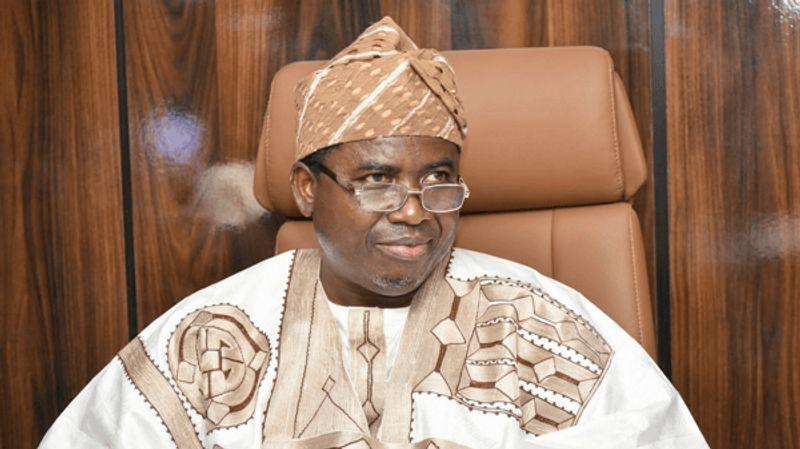
- INEC has approved the registration of two new political parties, Democratic Leadership Alliance (DLA) and Nigeria Democratic Congress (NDC)
- The commission said only DLA met all legal requirements after screening 171 associations, while NDC was registered following a court order
- The commission warned parties against internal leadership crises and excessive litigation
The Independent National Electoral Commission (INEC) has approved the registration of two new political parties, the Democratic Leadership Alliance (DLA) and the Nigeria Democratic Congress (NDC), as part of preparations for the 2027 General Election.
The INEC Chairman, Professor Joash Amupitan, SAN, announced the development on Thursday, February 5, in Abuja during the commission’s first regular consultative meeting with political parties for 2026.
According to him, the registration process began with 171 associations that submitted letters of intent to be recognised as political parties. These groups were assessed in line with relevant provisions of the 1999 Constitution (as amended), the Electoral Act 2022, and INEC’s Regulations and Guidelines for Political Parties.
Out of the 171 associations, only 14 met the initial prequalification requirements and were invited to move to the next stage. Eight of them eventually uploaded their documents on INEC’s portal: the All Democratic Alliance (ADA), Citizens Democratic Alliance (CDA), Abundance Social Party (ASP), African Alliance Party (AAP), Democratic Leadership Alliance (DLA), Green Future Party (GFP), National Democratic Party (NDP), and Peoples Freedom Party (PFP).
Amupitan said only two of the eight advanced to the final stage of assessment, but after full verification, only DLA satisfied all statutory conditions.
“After due consideration, only the Democratic Leadership Alliance (DLA) was found to have complied fully with the requirements of the law. Accordingly, the Commission has decided to register the Democratic Leadership Alliance as a political party, effective from today, 5th February 2026,” he stated.
He added that the registration of the Nigeria Democratic Congress followed a court directive.
“The Federal High Court sitting in Lokoja, Kogi State, in Suit No. FHC/LKJ/CS/49/2025 between Barr Takori Mohammed Sanni & Ors v. INEC ordered the commission to register Nigeria Democratic Congress (NDC) as a political party. The commission has decided to comply with the order,” Amupitan said, noting that certificates of registration would soon be issued to both parties.
With the new additions, Nigeria now has 20 registered political parties.
The INEC chairman also cautioned political parties against persistent leadership disputes and excessive litigation, warning that such conflicts undermine public confidence and distract the commission from its constitutional responsibilities.
“These infightings create uncertainty, erode public trust and divert the commission from its primary mandate. We urge party leaders to focus on constructive dialogue, policy development and community engagement rather than internal strife,” he said.
On voter participation, Amupitan urged parties to mobilise their supporters to collect their Permanent Voter Cards before the February 10 deadline in the Federal Capital Territory. He also warned against vote buying, describing it as a serious offence.
“Vote-buying is a subversion of the democratic will and a violation of the law. Anyone found engaging in it will face the full weight of the law,” he cautioned.
He further disclosed that INEC has finalised the timetable for the 2027 elections and will soon commence a nationwide voter revalidation exercise to clean up the register.
“A credible register of voters remains the bedrock of free, fair and transparent elections,” Amupitan said, stressing that irregularities such as duplicate entries and non-citizen registrations weaken confidence in the electoral system.
He also called on the National Assembly to speed up amendments to the Electoral Act to ensure legal clarity well ahead of the polls.
“INEC under my leadership will continue to be guided strictly by the Constitution, the Electoral Act, our regulations and the directives of the courts. This is a collective responsibility,” he added.
Meanwhile, the Inter-Party Advisory Council (IPAC) urged INEC to maintain impartiality and transparency as the country moves toward the 2027 elections.
IPAC National Chairman, Dr. Yusuf Mamman Dantalle, congratulated Amupitan on his appointment and called on the commission to guarantee a level playing field for all parties.
“INEC bears a profound constitutional duty to remain independent, neutral, firm and decisive in conducting elections that are free, fair, credible and inclusive,” Dantalle said.
He also appealed to INEC to strictly adhere to party constitutions when recognising party executives, noting that such recognition determines which leaders the commission officially engages.
Dantalle further encouraged political parties to make use of IPAC’s internal dispute-resolution mechanisms rather than resorting to court cases, warning that prolonged litigations harm democratic growth.
On electoral reforms, IPAC urged lawmakers to fast-track the harmonisation of Nigeria’s electoral laws and make real-time electronic transmission of results to the IReV portal mandatory ahead of 2027.
“Citizens expect a framework that restores trust in the system and ensures that every vote counts,” he said.
Dantalle also described upcoming elections in the FCT Area Councils, Ekiti and Osun states as key indicators of public confidence in INEC, while reiterating IPAC’s call for State Independent Electoral Commissions to be scrapped and for INEC to conduct all elections nationwide.
He concluded by pledging IPAC’s continued collaboration with INEC and other stakeholders to strengthen democracy and promote political stability across the country.
INEC unveils electoral reforms for 2025, including diaspora voting, PVC phase-out
Meanwhile, TheRadar earlier reported that the Independent National Electoral Commission (INEC) had announced plans for electoral reforms in 2025, including the gradual discontinuation of Permanent Voter Cards and the introduction of voting for Nigerians in the diaspora.
The commission noted that the proposed reforms stemmed from a meeting held in Abuja on Thursday, December 12, 2024, where Professor Mahmood Yakubu met with the Resident Electoral Commissioners.