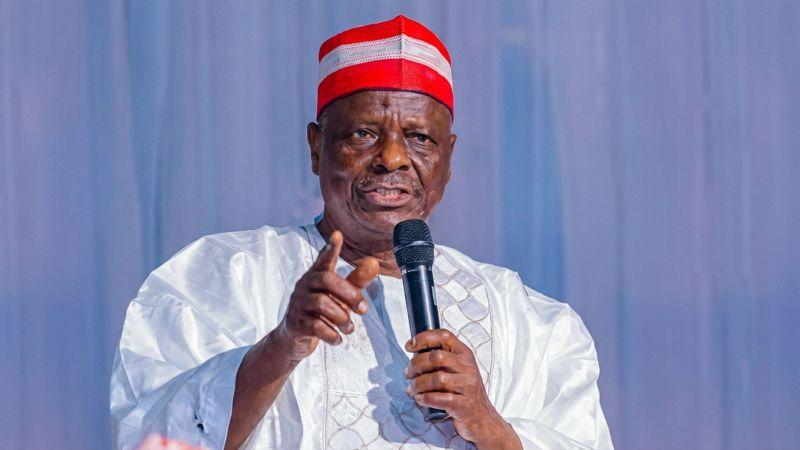
- Former Kano governor Rabiu Kwankwaso revealed that he and his supporters received no political or developmental benefit after helping Buhari win the 2015 election
- He claimed that the death of Yar’adua created confusion in Nigeria’s zoning arrangement
- The former Kano governor also defended the NDC’s decision to zone its 2027 presidential ticket to the South
A chieftain of the Nigeria Democratic Congress, Rabiu Kwankwaso, has revealed that he and his supporters received “nothing” after helping former President Muhammadu Buhari win the 2015 presidential election, saying the experience strengthened his desire for political change in Nigeria.
Speaking during an interview on Arise News on Monday, May 11, the former Kano State governor reflected on his role in the coalition that ended the 16-year rule of the Peoples Democratic Party at the federal level.
Kwankwaso said he and his political structure delivered nearly two million votes for Buhari during the election but were left disappointed by what followed.
“I worked so hard. We brought about 1.9, almost 2 million votes. But as politicians, we are not recognised. We put our lives even on the line at that time. But unfortunately, we could not see any benefit either as individuals or the constituencies that we represented,” he said.
Although he did not specify the exact expectations he had from the Buhari administration, Kwankwaso suggested that both his supporters and their communities failed to feel the impact of the government they helped bring to power.
The former governor also reviewed Nigeria’s democratic journey since 1999, offering his assessment of successive administrations.
He praised former President Olusegun Obasanjo for doing his best under difficult circumstances, while noting that the late Umaru Musa Yar'Adua struggled with serious health challenges during his presidency.
According to him, the administration of former President Goodluck Jonathan was shaped by controversy surrounding an alleged agreement that he would serve only one term after completing Yar’adua’s tenure.
Turning to the current administration of President Bola Ahmed Tinubu, Kwankwaso said many Nigerians at the grassroots were increasingly demanding change.
“Everybody knows there are issues with this administration again,” he said.
“And therefore, people are determined at grassroots level, and even at the level we are operating now, that there should be some level of changes.”
Kwankwaso linked the growing support for the Nigeria Democratic Congress to widespread dissatisfaction with previous governments.
He said the party had witnessed a surge in interest since he and former Labour Party presidential candidate Peter Obi formally joined the NDC on May 3.
“Since we decided to join NDC, Nigerians have decided to come and join us. People are opening offices everywhere across the world. So we are happy about that,” he said.
The former governor also defended the NDC’s decision to zone its 2027 presidential ticket to the South, arguing that the controversy over power rotation began after the death of Yar’adua in 2010.
“We believe the best way to go now is to take it to the south so that we can eliminate the confusion, the confusion that emanated from the death of our brother, our friend, Umar Musa Yar’adua. That actually introduced the confusion into the system,” he stated.
Yar’adua, a northerner, died in office after less than one full term, paving the way for Jonathan, a southerner, to complete the tenure and later secure a fresh mandate in 2011.
Kwankwaso acknowledged that arguments over zoning often depended on political interests and interpretation.
“One can argue that from 1999 to date, the south has done more years than the north. But it depends on how it suits you,” he said.
He explained that the NDC chose to count power rotation from the end of Buhari’s eight-year tenure, making a southern presidency the logical next step.
“What worked now is counting from Buhari. Anybody from the south on that side of argument would say that Buhari had eight years and the south is now doing its first term. In the next one year or so, it will be four years,” he added.
Kwankwaso further disclosed that northern politicians who joined the NDC accepted the zoning arrangement without resistance in the interest of unity.
“Almost all of us joining from the north, we accepted. There is no point in fighting,” he said.
Despite the debate over regional power-sharing, Kwankwaso maintained that competence and commitment remained more important than geography in choosing Nigeria’s next leader.
“What is key now is not presidency from the north or from the south. What is key is to have quality leadership, people who are enthusiastic, determined and committed to give the country the leadership it deserves,” he said.
Kwankwaso, Atiku loyalists declare support for Peter Obi ahead of 2027 election
Meanwhile, TheRadar earlier reported that supporters loyal to former Kano State governor, Rabiu Musa Kwankwaso and former Vice President Atiku Abubakar had declared support for Peter Obi ahead of the 2027 presidential election.
Speaking at the gathering, spokesperson for the Kwankwasiyya Movement, Habibu Muhammed, said the group decided to align with Obi because of his leadership record and commitment to national development.
According to him, the 2027 election could trigger a political shift driven by ordinary Nigerians determined to choose credible leaders with proven track records.