
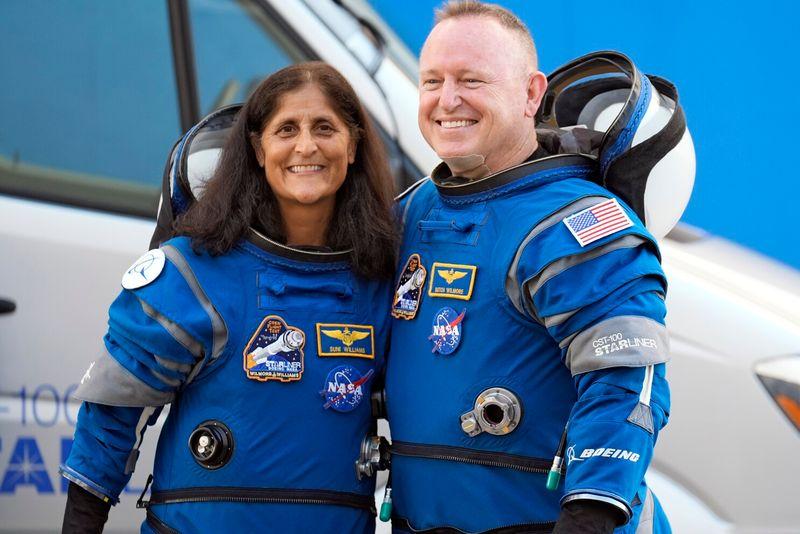
- NASA astronauts Butch Wilmore and Suni Williams returned to Earth after spending 286 days in space
- Returning astronauts often struggle readjusting to Earth's gravity
- Here are some effects being in space has on the human body
The National Aeronautics and Space Administration, NASA, astronauts Butch Wilmore and Suni Williams have returned to Earth after an unexpected nine-month stay aboard the International Space Station (ISS).
Originally meant to be an eight-day test mission, their time in space was extended due to technical failures with Boeing’s Starliner spacecraft.
While their return marks the end of a prolonged and challenging journey, their bodies will now have to readjust to life on Earth after months in microgravity.
Space is one of the most extreme environments for the human body.
While astronauts train rigorously for space travel, their bodies still undergo significant changes due to the absence of gravity.
How being in space affects human body
1. Muscle loss
On Earth, even the simple act of standing engages muscles throughout the body. In space, however, there is no need for muscles to support weight.
This leads to muscle atrophy, where muscle mass and strength decrease due to lack of use.
Astronauts aboard the ISS follow a strict two-hour daily exercise regimen that includes resistance training, cycling, and treadmill running to mitigate muscle loss.
However, despite these efforts, returning astronauts often find themselves significantly weaker.
2. Bones weaken
Bones, like muscles, need resistance to maintain their strength. On Earth, gravity continuously puts stress on bones, stimulating new bone growth.
In space, however, bones lose density because they are not subjected to the same forces. Astronauts can lose about 1% of their bone mass per month, a process similar to accelerated ageing.
While muscle strength can return in a matter of months, bone density recovery can take years, and even then, bones may never fully return to their pre-flight state.
3. Accelerated ageing
Gravity plays a crucial role in blood circulation on Earth. In space, without gravity pulling fluids downward, bodily fluids shift toward the upper body, causing astronauts to develop puffy faces and thinner legs, a condition sometimes called "bird leg syndrome".
The heart, which no longer has to work as hard to pump blood against gravity, can weaken over time.
4. Vision problems and brain fluid shifts
One of the lesser-known effects of space travel is how it impacts vision. The shift of bodily fluids toward the head can put pressure on the eyes, leading to swelling of the optic nerve and changes in eye shape.
Some astronauts experience blurred vision or other visual impairments, a condition known as Spaceflight-Associated Neuro-ocular Syndrome (SANS).
5. Disrupted balance and coordination
On Earth, the inner ear helps us sense gravity and maintain balance. In space, where there is no "up" or "down", the vestibular system (which controls balance) becomes disoriented.
Astronauts often feel dizzy or unsteady when they return to Earth, a sensation that can last for several days.
6. Immune system and gut microbiome changes
The human immune system also behaves differently in space. Studies suggest that prolonged exposure to microgravity can weaken immune responses, making astronauts more susceptible to infections upon returning to Earth.
Additionally, the gut microbiome, the collection of beneficial bacteria that aid digestion and overall health, space changes.
Wilmore and Williams’ road to recovery
Though Wilmore and Williams have safely returned to Earth, their bodies will take time to fully recover from nearly a year in space.
Their rehabilitation will involve strength training, bone density monitoring, cardiovascular tests, and neurological assessments.
Some effects, such as changes to bone structure or vision, may never fully return to normal.
Their mission, while unintentionally long, provides critical insights into how extended space travel affects the human body, knowledge that will be essential as NASA prepares for future missions to the Moon and Mars.
SpaceX to launch more private astronaut missions to ISS
Meanwhile, TheRadar earlier reported that Elon Musk’s SpaceX would launch additional private crew missions to the International Space Station (ISS) in collaboration with a California-based startup, Vast, as confirmed by the two companies on Thursday, December 19.
Pending NASA approval, the missions were part of Vast’s broader strategy to facilitate crewed and payload missions to the ISS.
