
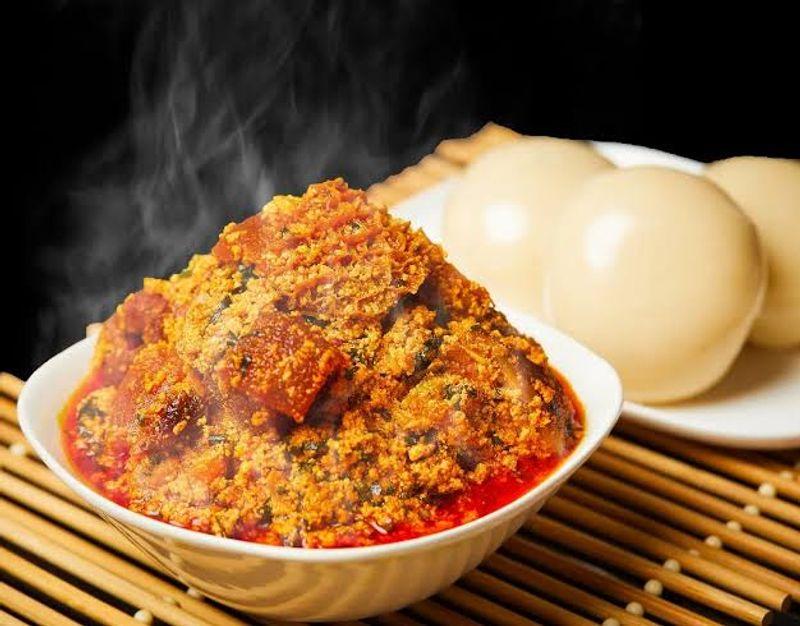
Analysing the earliest journey of the Nollywood industry since the 1960s, then full-fledged into a tremendous over $50 billion industry worth today, its relationship with food culture so far is not so palatable. Maybe, not a colossal failure in that sense but food being promoted as a culture most times, takes the back seat in Nollywood productions.
Who says food can’t always be a plot driver? Nollywood films, if not all, sometimes lack intentionality in portraying food through a cultural lens instead, food is often presented as props on set.
The relationship between film and food culture in Nigeria has remained the same over the years, not necessarily evolving as a part of our culture or the story being told. For clarity, the over-flogged trope of food in Nollywood usually follows almost the same pattern.
It is either a means of initiation into witchcraft, an angry wife poisoning her husband, or to portray an obese foodie, it is rarely intentional to weave a story that explores the rich food culture of Africans and Nigeria.
My childhood classic Nollywood memory of this was in the End of The Wicked film. The scene where children who had eaten puff-puff from a classmate in the day were initiated into witchcraft at night scared me for the longest. I probably still feel the same weirdly.
Whether fueled by paranoia or religion or fear of imaginary enemies, Nollywood has somehow created stereotypes around eating food from strangers, being too conscious when one leaves food behind— you must not eat it when you get back because it might have been poisoned.
This is not to totally dismiss the role of Nollywood, especially classics, in exposing certain realities around food; it just didn't help that there is too much emphasis on the negativity and less on the cultural essence of food as a part of our culture.
In recent times, there seems to be an improved approach to portraying food culture in Nollywood films. However, I can not deny the fact that there needs to be more intentionality in exploring the cultural essence of food in Nigeria, not necessarily as a prop.
For instance, the 2023 Battle on Buka Street, is one film that gave a remarkable food culture experience through its plot. Following the story of two rival sisters who opened restaurants on the same street, viewers explored delicacies from the Yoruba and Igbo tribes. The food culture in the film drove the story as well as other cultural-related themes.
Not to forget This Lady Called Life, which also explored and promoted food culture in its plot, with the lead Aiye, played by Bisola Aiyeola, pursuing her cooking dreams. Some other Nollywood titles have, in their own way, tried to share food as a part of our culture, but I doubt if it is enough.
Food culture is the collective habits, beliefs, values, lifestyles, and practices surrounding the production and consumption of food. Nollywood needs to be more intentional in celebrating Nigeria’s diverse and rich blend of food delicacies. It is not just a prop.
Idris Elba controversy: A reminder that Nollywood needs ‘whale’ investments
An earlier opinion explored how the Nigerian social media space went agog and controversial takes erupted on Idris Elba’s move to play Okonkwo in the Things Fall Apart adaptation series. Many kicked against it —like Idris Elba is a ‘disaster’ waiting to happen.
The piece also questioned how many Nollywood filmmakers can afford such an international production budget at the moment? Concluding that the argument, despite being valid, shouldn't be about who should or not play Okonkwo but how we make Nollywood and other art sectors financially buoyant enough to make such an ‘expensive’ and worthy book adaptation.
