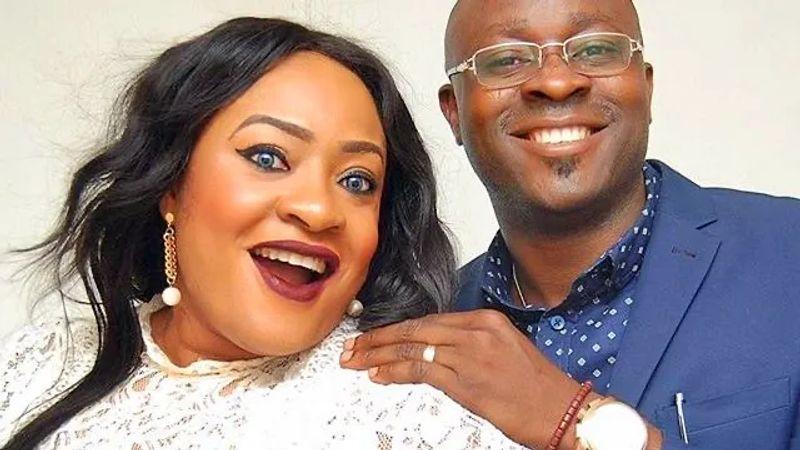
- Foluke Daramola said she does not feel like she is married
- She described her husband as supportive and her “definition of peace”
- Her comments followed past controversy over his second marriage
Popular Nollywood actress Foluke Daramola has revealed that she does not feel the conventional weight of marriage, describing her relationship as one built on freedom, friendship, and mutual understanding.
The actress made the disclosure during a recent appearance on the African A-List podcast, where she spoke candidly about her marriage to Kayode Salako.
According to Daramola, her husband embodies peace and gives her a level of independence that allows her to thrive both personally and professionally.
“I don’t feel like I’m married. My husband is the definition of peace for me,” she said. “If I tell Kayode now that I will be going to Canada tonight and will spend up to a year there, he will say bye-bye. It doesn’t mean he doesn’t love me; he just feels like he shouldn’t cage me.”
She further described Salako as not only her partner but also her closest friend and strongest supporter, highlighting the ease with which they resolve conflicts.
“He is my very good friend and my greatest cheerleader. When we fight, you would think that the marriage is going to end, but give us two hours, and everything will be settled,” she added.
Daramola’s remarks come amid public interest in her marriage, particularly following revelations two years ago that her husband had married another woman while still married to her. The woman, identified as Oluwafunke Oyegoke-Salako, was introduced as Salako’s second wife.
At the time, Salako defended his decision, stating that his 13-year marriage to Daramola had not produced a biological child. His comments sparked debate about polygamy, personal choice, and societal expectations within marriages.
Despite the controversy, Daramola’s recent statements suggest a level of acceptance and stability in her relationship, underpinned by mutual respect and understanding.
The couple, who married in 2010, have continued to maintain their union in the public eye, navigating personal challenges while presenting a united front.
Her reflections offer insight into evolving perceptions of marriage, particularly within modern African society, where traditional expectations are increasingly being redefined by individual experiences and values.