
- The Central Bank of Nigeria gave banks a 24-month window, ending March 31, 2026, to raise their capital base
- By late 2024, banks had raised a combined N1.7 trillion from the capital market through rights issues and public offers
- When the exercise closed, the CBN said 33 banks had met the new requirements, with N4.65 trillion raised in total
After the Central Bank of Nigeria (CBN) announced new guidelines for its recapitalisation policy for deposit money banks (DMB) on March 28, 2024, banks spent two years racing to meet the March 31, 2026 deadline. This article first tracked their progress in December 2024; the outcome of the exercise is set out below.
A circular by the apex bank announcing the recapitalisation guidelines stipulated a 24-month window, from April 1, 2024, to March 31, 2026, for commercial, merchant, and non-interest banks to upwardly review their minimum capital base depending on their licence authorisation.
The policy requires commercial banks with international authorisation to raise their capital base to a minimum of N500 billion from N50 billion previously. Those with national authorisation will raise theirs to N200 billion from N25 billion, while those with regional authorisation are required to reach the N50 billion threshold from N10 billion.
Merchant banks with national authorisation will have to increase their capital base to N50 billion from N15 billion previously, non-interest banks with national authorisation are expected to increase theirs to N20 billion from N10 billion, while non-interest banks with regional authorisation will raise their capital base to N10 billion from N5 billion.
The CBN said the move is to strengthen banks’ capacity to support the growth of the economy, particularly in being able to provide support for manufacturers and industrialists given that President Bola Tinubu, in his Policy Advisory Council report on the national economy, set a target of achieving a $1 trillion Gross Domestic Product (GDP) by 2030.
To meet the minimum capital requirements, the CBN said banks may decide to inject fresh equity capital through private placements, right issues and/or offer for subscription, mergers and acquisitions, and/or upgrade or downgrade of licence authorisation.
Progress by late 2024
By late 2024, the CBN and the Securities and Exchange Commission (SEC) confirmed that several banks had successfully raised the required capital ahead of the 2026 deadline, with N1.7 trillion mobilised at that point.
The amount was N3 trillion less than the N4.7 trillion that banks were estimated to need to meet the recapitalisation benchmark. Findings from the audited and unaudited financial reports of the 12 leading banks in the Nigerian Exchange Limited (NGX) showed a funding gap of N2.8 trillion, while others outside the NGX are estimated at N1.9 trillion.
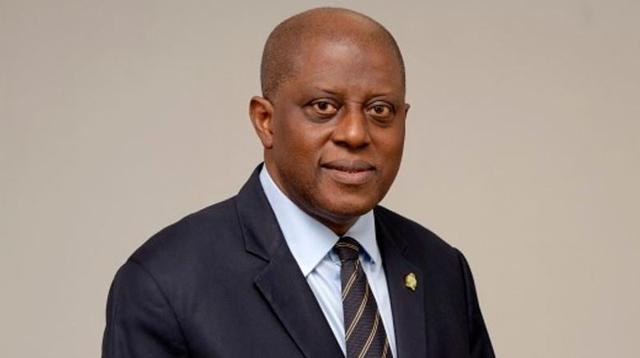
At the annual Bankers’ Night on Friday, November 29, 2024, CBN governor Olayemi Cardoso was optimistic about banks’ potential to meet the deadline and support Nigeria’s economic recovery.
Cardoso said, “I am pleased to note that a significant number of banks have raised the required capital through rights issues and public offerings, well ahead of the 2026 deadline.
“The banking sector is now in a stronger position to support Nigeria’s economic recovery by enabling access to credit for MSMEs and driving investments in critical sectors of our economy.”
Director-General of the SEC, Dr Emomotimi Agama, noted that the steps taken so far by banks in raising N1.7 trillion are indicative of their commitment to ensuring financial stability and boosting investor confidence in Nigeria’s capital market.
Capital-raising activities
In the months following the announcement of recapitalisation, banks went to work, scampering for funds through rights issues, public offers, mergers and acquisitions, and licence authorisation upgrades.
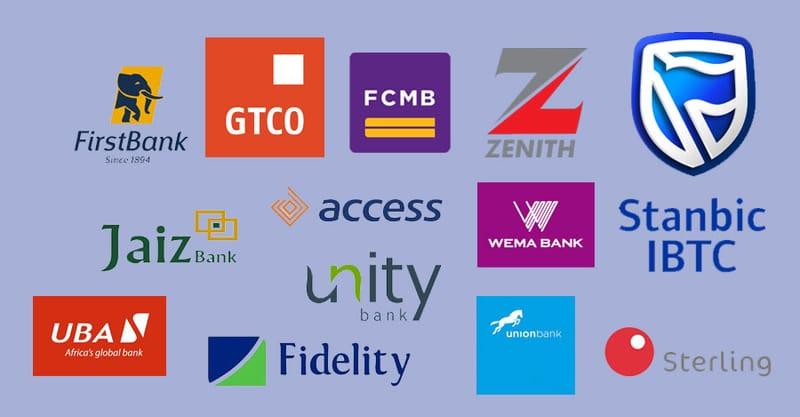
Access Bank, Zenith Bank, United Bank for Africa (UBA), Fidelity, Guaranty Trust Bank (GTBank), and First Bank Nigeria Holdings, among others, earlier made public offers and rights issues, which saw the sector’s stocks fluctuate on the stock market.
By the end of 2024, the tempo of public offers and rights issues had slowed, but the market remained active with pockets of recapitalisation exercises.
In its Recapitalisation Watch for the week ended November 29, Proshare noted that there is progress within the sector, highlighting that several banks remain active in the capital markets despite limited new updates.
For instance, First City Monument Bank (FCMB) announced plans to seek board approval for a capital raise of N340 billion at its Annual General Meeting (AGM) scheduled for December 19, 2024.
United Bank for Africa (UBA), on its part, started a Rights Issue to raise N239.4 billion, offering 6.84 billion ordinary shares at 50 kobo each, priced at N35.00 per share. The bank said existing shareholders could subscribe on a 1-for-5 basis for shares held as of November 5, 2024.
First Bank of Nigeria Holdings Plc targets N730 billion capital raise through a Rights Offer of 5.98 billion ordinary shares at 50 kobo each, priced at N25.00 per share.
The offer, available on a 1-for-6 basis for shares held as of October 18, 2024, was scheduled to close on December 12, 2024.
How the recapitalisation ended
The pace picked up through 2025 and early 2026. In early March 2026, the CBN said 30 banks had met the new minimum capital requirements for their licence categories, with others still undergoing verification.
On April 1, 2026, the CBN announced the conclusion of the programme. It said 33 banks had met the revised requirements and that banks had raised N4.65 trillion in new capital, 72.55 per cent of it from local investors and 27.45 per cent from international markets.
The CBN did not name the banks that fell short. It said a limited number of institutions remained subject to ongoing regulatory and judicial processes, and that all banks remained operational. ThisDay reported that 33 of 37 banks had met the requirements.
“The recapitalisation programme has strengthened the capital base of Nigerian banks,” Cardoso said.
CBN’s recapitalisation policy has got banks running helter-skelter for funds
Earlier, TheRadar reported that deposit money banks (DMBs) in Nigeria had been on their toes and busy making efforts toward meeting the new recapitalisation policy of the Central Bank of Nigeria (CBN).
After the announcement, Nigerian banks were scampering for funds through many capital-raising activities.
This article was updated on 19 November 2026 to add the outcome of the recapitalisation exercise, which closed on March 31, 2026, and correct the GDP target to $1 trillion.