
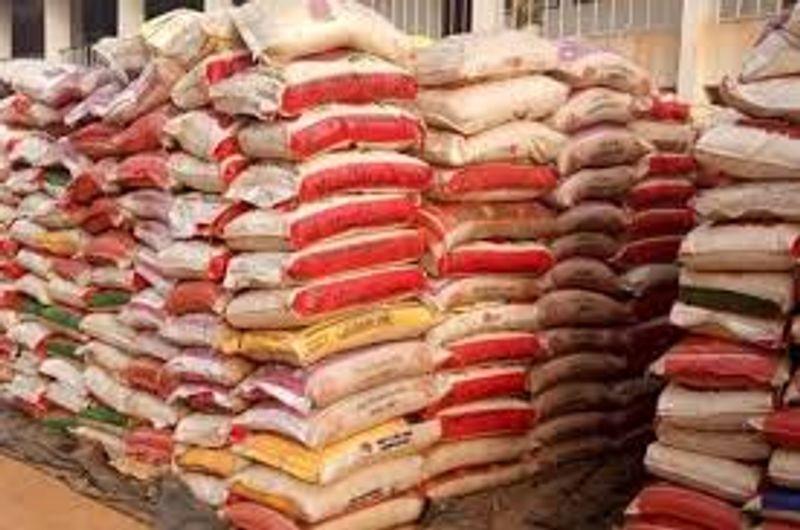
- The price of imported rice rose by 144.77 per cent in one year
- Inflationary pressures also impacted other categories of rice and grains
- The delay in implementation of the federal government’s import duty-free policy is eroding the objectives of the policy
The average price of imported high-quality rice increased by 144.77 per cent in one year, rising from N49,103 in September 2023 to N120,193 in September 2024.
According to the selected food prices report from the National Bureau of Statistics, imported rice cost N982.07 per kilogramme (kg) in September 2023, but the price has more than doubled in one year.
The report noted that in September 2024, Kogi State recorded the highest price for 1kg of imported rice at N3,180.99, while Katsina State recorded the lowest price at N1,892.33.
Price of rice rises following FG’s import duty-free policy
The price of rice has increased by 3.21 per cent within three months since the federal government announced the suspension of import duties, tariffs and taxes on essential food items for 150 days to address skyrocketing inflation. The price has gone from N2,329.05 in July to N2,403.86 in September.
While announcing the suspension on July 8, 2024, the Minister of Agriculture and Food Security, Abubakar Kyari, said the policy only applies to the importation of such commodities as maize, husked brown rice, wheat and cowpea.
However, the policy had yet to take effect even as the Customs, on August 7, assured of its readiness to implement it in one week, attributing the one-month delay to the late release of guidelines from the Federal Ministry of Finance.
A week later, Customs gave guidelines and criteria for companies to participate in the duty-free importation policy of the government and further noted that the six-month tariff waiver and import duty suspension would cost the country an estimated N188.37 billion in revenue.
However, more than three months after the announcement, the policy is yet to be implemented. While the factors responsible for the non-implementation of the policy may not be known to many Nigerians, its delay has had a significant impact on the populace, especially with soaring prices of food items, technically defeating the aim of the policy.
With Customs saying it is yet to get the list of beneficiaries from the Ministry of Finance, Customs agents lamenting policy inconsistency and the government keeping mum on the matter, the aim of the policy is gradually been defeated by soaring inflation and continued depreciation of the naira.
Other categories of rice increased, too
According to the NBS report, other categories of rice have also increased since the import duty-free policy was announced.
Agric rice sold loose increased by 4.42 per cent from N1,882.39 in July to N1,965.64 in September 2024. The rice increased by 146.33 per cent on a year-on-year basis from N797.98 in September 2023.
The report also noted that Nasarawa State recorded the highest price, N3,050.33, while Benue State had the lowest, N1,314.13.
Medium-grain rice also followed the same pattern of inflation. The product increased by 3.83 per cent from N1,924.76 in July to N1,998.39 in September.
In one year, the price of the product increased by 147.66 per cent. Kogi State posted the highest price, at N2,836.52, while Katsina State recorded the lowest price, at N1,515.38.
Broken rice (Ofada) increased by 5.61 per cent from N2,234.06 in July to N2,359.47 in September, representing a 213.36 per cent increase in one year.
As analysed by states, Osun recorded the highest price, N3,300, while Adamawa recorded the lowest, N1,375.
Also, loose local rice increased by 4.57 per cent from N1,831.05 in July to N1,914.77 in September. On a year-on-year basis, the product increased by 152.92 per cent compared to the N757.06 it sold for in September 2023.
The price of local rice was highest in Kogi State at N2,688.04, while Benue State recorded the lowest price at N1,229.14.
Maize wasn’t spared from the increase
The prices of maize have also increased in the last year, especially since the import duty-free policy was announced.
The price of white maize grain increased by 3.58 per cent from N1,028.33 in July to N1,065.14 in September. The increase in the price of the grain saw an 87.88 per cent increase year-on-year from N566.93 in September 2023.
The highest increase in the price of grain was recorded in Kwara State, at N1,440.31, while Adamawa posted the lowest, at N675.
Yellow maize grain rose by 2.69 per cent from N1,037.45 in July to N1,065.33 in September, recording a year-on-year increase of 88.93 per cent. The highest price for the grain was recorded in Kwara State at N1,388.84, while Adamawa posted the lowest price at N775.
Food inflation vs imported food inflation
According to the NBS inflation data, there was a significant increase in food inflation and imported food inflation in September 2024.
The Food Price Index rose by 37.7 per cent, rising from 737.3 in September 2023 to 1,015.8 in 2024.
On the other hand, imported food inflation increased by 39.5 per cent as the price index increased from 629.6 in September 2023 to 878.3 in 2024.
The data indicates that in September 2024, food inflation stood at 37.7 per cent while imported food inflation stood at 39.5 per cent.
Tinubunomics: FG’s promises to reduce food price hike yet to take effect months after
Meanwhile, TheRadar reported that to mitigate skyrocketing prices of goods and services, the federal government announced some policies to address the challenge.
However, these policies are yet to be implemented months after they were announced as soaring inflation and naira devaluation are eroding the impact of the policies.
