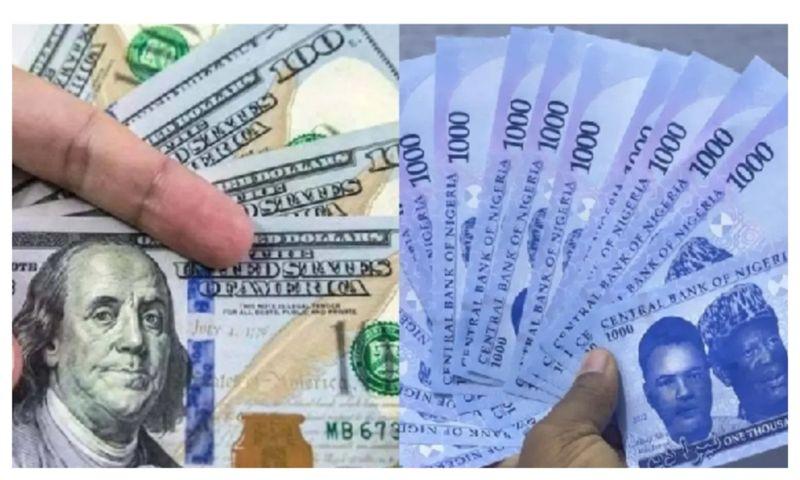
- The naira appreciated against the US dollar, closing at N1,386.55 in official markets and N1,470 in the parallel market on Friday
- Week-on-week gains showed a N35 rise at the official rate and N20 in the black market, reflecting steady currency recovery
- Economists attributed the uptrend to rising foreign exchange reserves, improved investor confidence, and coordinated policy efforts
The naira recorded a substantial appreciation against the United States dollar across both official and parallel foreign exchange markets, closing the week on an encouraging note for the domestic currency.
According to data from the Central Bank of Nigeria (CBN), the naira gained further ground on Friday, trading at N1,386.55 per dollar. This represents a notable increase from Thursday’s (January 26) rate of N1,396.99, signalling a day-on-day strengthening of N10.44.
The gains were mirrored in the parallel or black market, where the naira rose by N10 to close at N1,470 per dollar, up from N1,480 recorded the previous day. Analysts suggest that coordinated policymaking and improvements in macroeconomic indicators have bolstered investor confidence, contributing to the currency’s upward trajectory.
A week-on-week review indicates that the naira posted even more substantial gains over the past seven days. At the official market, the currency appreciated by N35.08 against the dollar, while at the black market it appreciated by N20. Such performance reflects a steady trend of recovery and consolidation, reversing some of the pressures experienced earlier in the month.
Economists have attributed the currency’s uptrend to a combination of factors, most notably the growth of Nigeria’s foreign exchange reserves. According to the CBN, the nation’s reserves rose to $46.18 billion as of 29 January 2026, up from $46.01 billion the previous Friday. The increase in reserves provides additional support for the Naira and strengthens the central bank’s ability to manage market liquidity effectively.
Market watchers note that the Naira's appreciation could have broader implications for the Nigerian economy. A stronger local currency can reduce inflationary pressures on imported goods, improve purchasing power, and enhance confidence in domestic financial markets. However, they also caution that sustaining such gains will require continued prudent fiscal and monetary policies, as well as efforts to boost foreign inflows and diversify revenue sources.
The week’s performance marks a welcome development for businesses, investors, and consumers who have long contended with the Naira's volatility. As the currency continues to demonstrate resilience, stakeholders are hopeful that the positive momentum will persist into the coming months.
Net FX inflow surges by 245.9% in 1 year
Meanwhile, TheRadar earlier reported that net foreign exchange (FX) inflow into Nigeria soared by 245.9 per cent in one year.
According to the Central Bank of Nigeria (CBN)’s economic report, FX inflows rose to $5.95 billion as of November 2024, up from $1.7 billion in November 2023.