
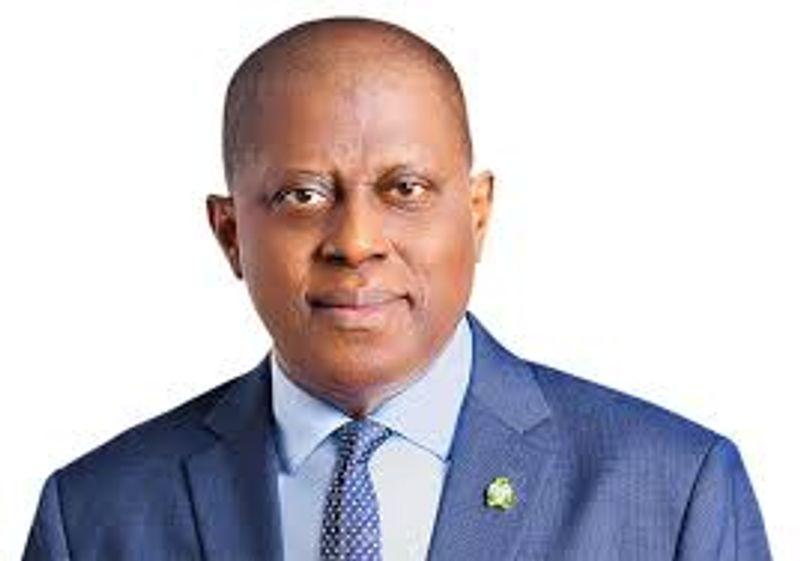
- Olayemi Cardoso, the governor of the Central Bank of Nigeria, has urged telecommunications companies to prioritise localised key supply chains
- He said there is a need to deepen backward integration in the sector and reduce dependence on foreign exchange
- Cardoso said the CBN plans to expand digital financial services and inclusion
The governor of the Central Bank of Nigeria (CBN), Olayemi Cardoso, has called on telecommunication companies to prioritise localised key supply chains and reduce dependence on foreign exchange.
According to a press statement issued by the apex bank on Thursday, February 13, Cardoso stressed the need for deeper backward integration in the telecommunications sector.
Cardoso stressed that telecom companies must take steps to produce essential components such as SIM cards, cables, and towers locally, which would ease pressure on dollar demand, create jobs, and strengthen the broader economy.
The statement noted that Cardoso stated this in Abuja on Wednesday, February 12, during a courtesy visit by Airtel Africa’s management team led by Group Chief Executive Officer, Mr Sunil Taldar.
He stressed that the apex bank has spent the last 16 months stabilising the foreign exchange market, strengthening the naira’s competitiveness, and boosting investor confidence in the Nigerian economy.
Cardoso added that with these gains, telecom companies should adopt local production to consolidate economic progress.
CBN to expand digital financial services, inclusion
The statement also noted that Cardoso outlined the CBN’s vision of improving financial inclusion and enhancing digital payment solutions for Nigerians.
According to him, the apex bank is planning a high-level summit, where it will collaborate with key industry stakeholders to develop strategies for expanding financial services, especially to underserved and rural communities.
He said, “The CBN is committed to ensuring that financial services reach more Nigerians, especially in rural and underserved communities.
“Through collaboration with relevant agencies and industry players, we aim to build a more inclusive and digitally-driven financial ecosystem.”
Cardoso further assured telecom operators that the CBN would continue to create an enabling environment for financial service providers, fostering competition, innovation, and accessibility for consumers.
Airtel reiterates its commitment to financial inclusion
Airtel Africa’s Group CEO, Sunil Taldar, commended the CBN’s economic reforms and said the company is in support of backward integration in the telecom sector.
Taldar said reducing reliance on foreign exchange was in the long-term interest of telecom operators and the broader economy.
He also reiterated Airtel’s commitment to deepening financial inclusion through technology-driven solutions and pledged continued collaboration with regulators to drive digitisation and economic growth in Nigeria.
NCC approved a 50 per cent tariff hike
It will be recalled that the NCC approved a 50 per cent hike in tariff on Monday, January 20, after weeks of deliberations with telecom operators, in response to prevailing operational costs.
The Association of Licensed Telecommunications Operators of Nigeria (ALTON) and the Association of Telecommunications Companies of Nigeria (ATCON) raised several concerns and asked the NCC to upwardly review tariffs.
The operators asked for a 100 per cent hike so they could meet up with rising capital and operational costs.
They also noted that proceeds from the tariff increase would be channelled toward infrastructural upgrades and enhancing service quality.
However, on January 16, the Minister of Communications, Innovation, and Digital Economy, Bosun Tijani, said a hike in telecom tariffs would not exceed 60 per cent, saying that a 100 per cent increase would hurt Nigerians and hamper the country’s economic growth.
The 50 per cent tariff hike was met with rejection from telecommunication subscribers, as they threatened legal action against the NCC if the hike is not reviewed downward to between five and 10 per cent.
On Tuesday, February 11, telecom giant, MTN began implementing the tariff increase as it hiked the price of internet data across different bundles.
The new pricing means that internet subscribers will now have to pay N6,000 for a 15GB weekly data plan, a 200 per cent increase from the previous N2,000.
Explore capital market funding, not 100% tariff hike, subscribers urge telcos
Meanwhile, TheRadar earlier reported that telecommunications operators were urged to explore capital market funding as a sustainable option to address rising operational costs rather than implementing a proposed 100 per cent tariff hike.
President of the National Association of Telecommunications Subscribers (NATCOMS), Adeolu Ogunbanjo, said the proposed tariff hike would impose financial strain on consumers.
