
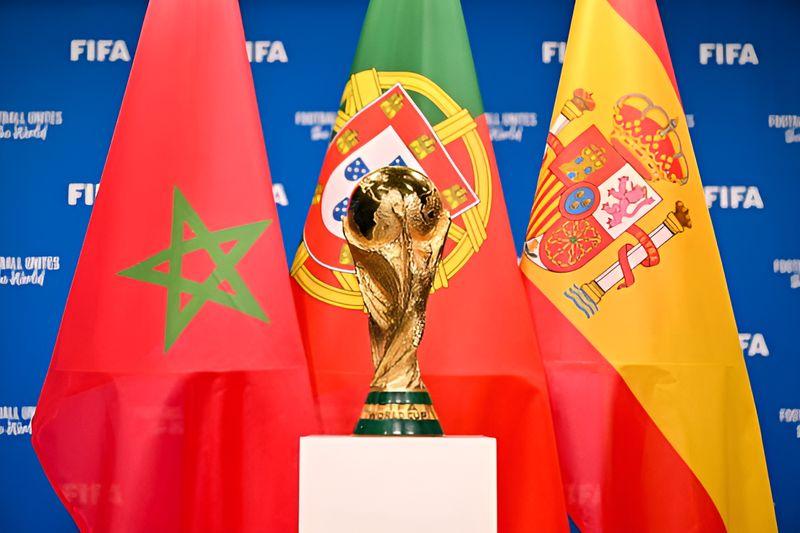
- FIFA announced the 2030 World Cup will span three continents, Europe, Africa, and South America, marking a major milestone in the competition's history
- Spain, Portugal, and Morocco will host the majority of matches, with the first three games held in Uruguay, Argentina, and Paraguay to commemorate 100 years since the inaugural World Cup
- Saudi Arabia also secured the hosting rights for the 2034 World Cup after their uncontested bid was ratified by FIFA
World football governing body Fédération Internationale de Football Association (FIFA) has unveiled the hosts for the 2030 World Cup, setting a historic precedent by scheduling matches across three continents, Europe, Africa, and South America.
Although Spain, Portugal, and Morocco secured the main hosting rights, the opening three matches will take place in Uruguay, Argentina, and Paraguay commemorating the centenary of the first World Cup in 1930.
Lionel Messi and Argentina’s triumph in Qatar in 2022 marked a memorable chapter in World Cup history. In 2026, the tournament will take centre stage in North America, with the USA, Canada, and Mexico co-hosting. But the 2030 edition promises to break new ground in the tournament’s illustrious history.
For the first time, matches will span six countries and alternate across hemispheres. FIFA's decision to play the opening matches in South America is simply replicating history. The inaugural World Cup in 1930 was hosted and won by Uruguay, with Argentina finishing as runners-up.
Paraguay, home to CONMEBOL, South America’s football confederation and the only federation in existence at the time, will also host a game. FIFA emphasised that these opening matches aim to honour the tournament’s early beginning and the centenary celebration.
FIFA President Gianni Infantino stated,
“The centenary game will be played in Montevideo, Uruguay, in conjunction with the centenary celebration and ceremony, in recognition of Uruguay’s role as the host and winner of the 1930 edition. Argentina and Paraguay will also host games to recognize their historic contributions to the inaugural World Cup.”
The joint bid from Spain, Portugal, and Morocco narrowly edged out South America’s proposal, which included Argentina, Chile, Paraguay, and Uruguay. This marks the first World Cup to unite nations from Europe, Africa, and South America under a single banner.
Meanwhile, Saudi Arabia won hosting rights for the 2034 World Cup after their bid went uncontested. The decision was ratified at an online FIFA Congress, with over 200 member federations affirming it unanimously.
FIFA stated its commitment to expanding the global reach of the sport, with Infantino stating,
“We are bringing football to more countries, and the increased number of teams has not diluted the quality but enhanced opportunities.”
Nigeria, Germany, 10 other countries to have been banned by FIFA and why
Previously, TheRadar reported that FIFA, the global body governing football, has sanctioned a range of countries for breaching its rules over the years.
The most prominent case today is Russia, whose exclusion stems from its invasion of Ukraine in 2022. This sanction serves as a reminder that football isn’t immune to political realities. But there are several other countries with similar bans in FIFA's history.
