
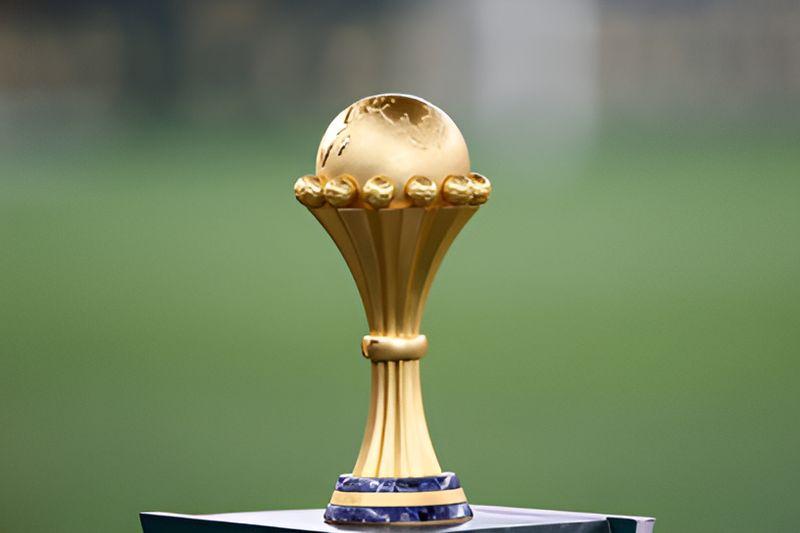
The Africa Cup of Nations (AFCON) remains one of the most popular tournaments in football. While often belittled in mainstream football discussions, its impact on European clubs is undeniable.
Every two years, teams brace for instability as key African players depart mid-season, affecting squad balance, finances, and overall performance. The debate over AFCON’s prestige and global standing resurfaced recently when Liverpool legend Jamie Carragher claimed it lacked ‘major’ tournament status, triggering backlash from African football legends.
If AFCON were truly insignificant, why does it cause such upset? The tournament may not be as acceptable and revered globally, but its influence on clubs cannot be swept under the carpet.
AFCON: A tournament dismissed, yet feared
For a competition often belittled in mainstream football discourse, the Africa Cup of Nations (AFCON) interestingly holds much weight in the European football calendar.
While some pundits, like Jamie Carragher, downplay its global significance, European clubs dread the tournament’s arrival every two years. The reasons? it disrupts squad balance, impacts finances, and increases injury risks, proving its undeniable influence.
AFCON’s scheduling, typically in January and February, during the heat of Europe’s domestic campaigns. Unlike the summer tournaments of the Euros or Copa América, AFCON forces European clubs to part with key players during pivotal phases of the season.
Reports suggest that clubs like Nottingham Forest and Tottenham have faced losing up to six players simultaneously, leading to tactical tweaks and competitive disadvantages in crucial league fixtures.
Squad depth is tested, rotations become a gamble, and managers are forced into emergency lineup adjustments, all because of a tournament many claim is not a ‘major’ one.
Another major concern for European clubs is the potential for injuries. AFCON is played in a variety of conditions, with some stadiums offering lower-quality playing surfaces compared to pristine European pitches.
This, coupled with the physically intense style of AFCON football, increases the risk of fatigue and injuries. For instance, Liverpool star Mohamed Salah’s early return from international duty last October, amidst concerns over his fitness playing on an artificial pitch during the AFCON tournament qualifiers.
Clubs pour millions into player fitness, and the fear of losing stars to a mid-season tournament remains a significant talking point in European boardrooms.
Beyond the physical and tactical concerns, AFCON disrupts team chemistry. Football is as much about momentum as it is about talent, and losing key players mid-season forces clubs to reshuffle formations, test fringe players in critical games, and risk destabilising well-drilled squads.
It is no news that football is a business, and players are more than just athletes, they are financial assets. Star African players boost merchandise sales, attract global audiences, and serve as marketing tools for clubs.
Their absence during AFCON means potential drops in ticket revenue, diminished branding appeal, and even potential devaluation in the transfer market. European clubs fear that injuries sustained at AFCON could affect long-term player valuations, making them cautious about signing African talents despite their undeniable quality.
If AFCON were truly insignificant, clubs wouldn’t fear it. Yet, every two years, European teams brace themselves for a period of instability, knowing they are about to lose some of their most influential players to a tournament that supposedly “lacks global weight.”
The contradiction is clear, AFCON is dismissed when discussing football’s elite competitions, yet its impact on European clubs proves otherwise.
Carragher’s argument and flawed perception of international tournaments
Liverpool legend Jamie Carragher’s assertion that Mohamed Salah would need to win the Champions League to stand a realistic chance at the Ballon d’Or, because AFCON is not considered a ‘major tournament’, exposed a deep-seated bias in how global football recognition is structured,
"I think the problem is the fact he's with Egypt, and he's probably not playing in the major tournament as such, or maybe got a great chance of winning, I think it's either the Champions League or the major tournament. Normally, the player who excels in that," Carragher said.
Carragher’s statement, made during a Sky Sports broadcast, triggered criticism from former players and pundits, reflecting how the African tournament is viewed in the Ballon d’Or conversation.
Carragher further argued that Salah’s chances were diminished because Egypt is unlikely to win the World Cup and that AFCON does not carry the same prestige as the Euros or Copa America,
"I think the problem is the fact he's with Egypt, and he's probably not playing in the major tournament as such, or maybe got a great chance of winning, I think it's either the Champions League or the major tournament. Normally, the player who excels in that," he stated.
His words struck a nerve, particularly among African football legends like Jay-Jay Okocha and Mikel Obi, who both countered that AFCON is a tournament of immense difficulty, rich history, and continental significance.
Okocha, speaking in an interview on Friday, February 28, said,
“There are some players that will say something, you just overlook it. If you look at their career, if you look at the type of football that they played, you can understand. I mean, you wouldn’t want your son to be like Carragher. So, he can never appreciate African football or the talents that come from Africa.”
Mikel Obi labelled Carragher’s stance as “disrespectful,” questioning why the tournament’s credibility continues to be undermined,
“The Africa Cup of Nations is as big [as the Euros]. I’ve played in it and won it. It’s not in his f*ing place to discredit the AFCON. He sits there week in, week out, teaching and coaching people on how to win the Premier League, and he never won it!” the former AFCON winner retorted.
Even England legend Rio Ferdinand, speaking on his podcast, acknowledged the issue, calling Carragher’s viewpoint an “ignorant thought process” that fails to give AFCON the respect it deserves.
Why do other tournaments carry more weight than AFCON in Ballon d'Or voting?
The Ballon d’Or voting process, conducted by 100 journalists worldwide, heavily favours performances in Europe and South America over Africa. This bias is reflected in how ‘major’ international tournaments have previously influenced the award.
A World Cup win, a dominant Euros campaign, or an outstanding Copa America showing can significantly elevate a player’s chances. The same, however, does not apply to AFCON.
Historically, players who shine in the Copa America or Euros, even without stellar club seasons, are considered front-runners for the Ballon d’Or. Lionel Messi won the award in 2021 largely due to his Copa America victory with Argentina, despite having a relatively subdued club season with Barcelona and PSG.
Real Madrid star Kylian Mbappé, as Carragher noted, could likely win the Ballon d’Or with just a strong Euros or World Cup, even if his club performances were average.
Meanwhile, African stars are rarely given the same advantage. If Salah were to lead Egypt to an AFCON title while having an ‘average’ club season, it is unlikely he would be considered a strong contender for the award. This discrepancy is not just a matter of perception but an institutional bias embedded in the Ballon d’Or voting process.
The reaction from African football icons like Okocha and Obi proves that the discussion surrounding AFCON’s global standing is long overdue for reevaluation. As football becomes increasingly globalised, the notion that only European and South American tournaments are ‘major’ must be challenged.
AFCON has produced some of the most intense and technically brilliant footballing moments in history, and the reluctance to recognise its influence only serves to perpetuate an outdated hierarchy in world football.
Football has long been viewed through a European lens, where prestige and significance are often defined by UEFA-dominated narratives. Jamie Carragher’s comments, questioning whether international tournaments outside of Europe carry the same weight, echo a sentiment that has sidelined AFCON’s importance.
The inconsistency in how these tournaments are weighed raises the question: Is the definition of a major tournament based on footballing prestige or merely European validation?
AFCON: Prestige or European validation
By any fair measure of competitiveness, historical significance, and global reach, AFCON deserves to be considered alongside the Euros and Copa América. The idea that only UEFA affiliated competitions are prestigious is a ‘manufactured’ concept, reinforced by a system that heavily favours European achievements.
AFCON’s battle for respect is not just about football; it is about breaking down institutional biases and acknowledging the global nature of the sport beyond the shores of Europe.
If African football continues to develop its infrastructure, secure better global representation, and demand equal recognition, the days of AFCON being dismissed as a secondary tournament will soon be over.
CAF tribunal hands Super Eagles 3-0 win, slams Libya with hefty fine
Previously, TheRadar reported that the Confederation of African Football’s Disciplinary Committee had made a big decision in Nigeria’s Africa Cup of Nations qualifier against Libya, awarding the Super Eagles three points and three goals due to the match’s abandonment.
Earlier reports showed that the match’s controversy began when Nigeria’s team refused to participate, citing serious safety concerns after spending more than 18 hours stranded at Al-Abraq airport.
