
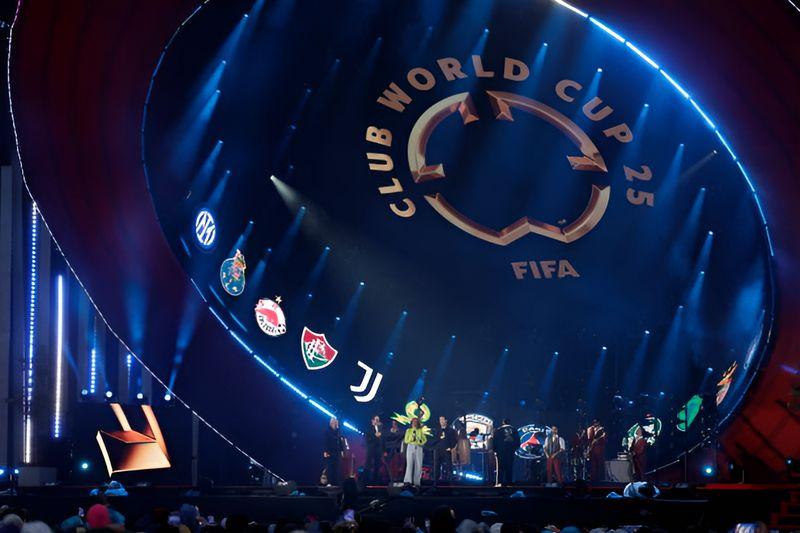
- The 2025 FIFA Club World Cup will feature a groundbreaking $2.65 billion prize pool, with $100 million awarded to the tournament winner
- The expanded tournament, set to take place in the United States, will host 32 teams from around the globe, marking a significant evolution of the Club World Cup
- Controversy surrounds the inclusion of Inter Miami as the U.S. representative, with speculation that it aims to spotlight Lionel Messi
The 2025 FIFA Club World Cup is set to be a landmark event, thanks to its new 32-team format and massive $2.65 billion prize pool. Scheduled to run in the United States from June 15 to July 13, 2025, the tournament will raise the stakes in global football. The highlight is the $100 million prize for the winner, the biggest ever in football history, which has already grabbed attention across the sport.
The journey of the Club World Cup under FIFA began modestly in 2000 as an eight-team competition in Brazil. Over time, the tournament evolved into an annual event, featuring seven teams from FIFA's six continental confederations and the host nation. However, FIFA President Gianni Infantino’s ambitious plans for 2025 have transformed it into a 32-team mega-event, mirroring the format of the FIFA World Cup.
In 2023, the Club World Cup offered $16 million in total prize money, a figure dwarfed by the upcoming event. FIFA’s commitment to offering a $100 million prize for the champion has turned the competition into one of the most lucrative in the sport, rivalling the UEFA Champions League’s $89 million payout to Real Madrid during the 2023-24 season.
Securing broadcasting rights for this billion-dollar event has proven challenging. Reports revealed that Apple’s initial $1 billion bid fell short of FIFA’s $4 billion valuation. Speculation suggests that Saudi Arabia’s Public Investment Fund might contribute funding through FIFA’s streaming platform, though no official confirmation has been made.
FIFA has emphasised that the expanded prize money aims to distribute wealth more evenly across global football. Smaller clubs, especially from Africa, Asia, and South America, stand to benefit significantly. Historically, clubs like DR Congo’s TP Mazembe and Japan’s Kashima Antlers leveraged their Club World Cup earnings to improve infrastructure and their standing domestically.
The financial incentives for the 2025 Club World Cup outshine other competitions. Copa Libertadores champions earned $31.34 million in 2023, while Premier League winners Manchester City took home $79 million. Even UEFA increased its prize pool to $2.71 billion for the 2024-25 Champions League, perhaps to counter FIFA’s growing ambitions.
However, the inclusion of Inter Miami as the host nation’s representative has raised eyebrows, with many speculating it’s a move designed to spotlight Lionel Messi. While controversial, Messi’s participation ensures global attention and further boosts the tournament’s commercial appeal.
Nigeria, Germany, 10 other countries to have been banned by FIFA and why
Previously, TheRadar reported that FIFA, the global body governing football, has sanctioned a range of countries for breaching its rules over the years.
The most prominent case today is Russia, whose exclusion stems from its invasion of Ukraine in 2022. This sanction serves as a reminder that football isn’t immune to political realities. But there are several other countries with similar bans in FIFA's history.
