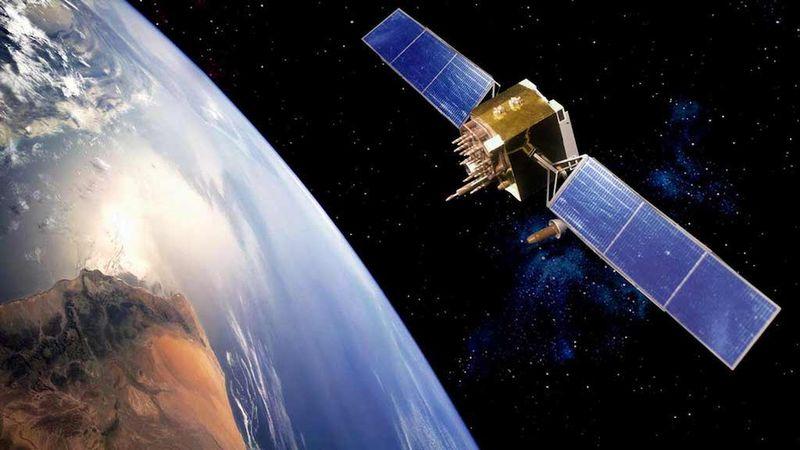
- The Federal Government has transitioned the NIGCOMSAT-2 programme from planning and procurement into full execution
- The two satellites, NIGCOMSAT-2A and NIGCOMSAT-2B, have been scheduled for launch in 2028 and 2029, respectively
- The new satellites are part of a broader plan to replace the ageing NigComSat-1R to ensure Nigeria maintains and upgrades its communication satellite capabilities without service disruption
The Federal Government has advanced Nigeria’s next-generation satellite programme into the execution phase, with two communication satellites, NIGCOMSAT-2A and NIGCOMSAT-2B, scheduled for launch in 2028 and 2029.
The Managing Director of Nigerian Communications Satellite Limited (NIGCOMSAT), Mrs Jane Nkechi Egerton-Idehen, disclosed this on Monday, March 30, during the 2026 Satellite Week in Abuja, noting that the project has moved beyond procurement into financing and implementation.
She said the initiative reflects Nigeria’s growing commitment to leveraging space technology to drive national development, enhance sovereignty, and strengthen security infrastructure.
“For 2A and 2B, we have started the process. We have closed the tender and are now back into the financing and implementation stage. 2A is built to come up in 2028, and 2B for 2029.
“When they are up and running, they are expected to provide security within the borders and neighbouring countries. They will support the security agencies because data collection and intelligence in real time is important. Satellites like communication satellites allow that, irrespective of where they are,” she said.
Egerton-Idehen explained that the satellites will significantly improve real-time communication, intelligence gathering, and connectivity across underserved and remote areas.
She added that the systems would support applications such as precision agriculture, rural broadband expansion, and disaster response.
“When operational, the satellites will strengthen security within Nigeria and neighbouring countries, while supporting agencies with critical data and intelligence,” she added.
The event, themed “Harnessing Space for an Extraordinary Nigeria,” brought together policymakers, researchers, industry experts, and technology innovators to explore opportunities in space and digital infrastructure.
Also speaking, the Minister of Communications, Innovation and Digital Economy, Dr Bosun Tijani, said the satellite programme signals a strategic shift from policy approvals to actual delivery.
According to him, the initiative complements ongoing investments in fibre-optic networks, telecommunications towers, and broader digital infrastructure.
“The President’s approval of NIGCOMSAT-2A and 2B demonstrates a clear commitment to building the future. These satellites will enhance security, connect remote communities, and extend our fibre-optic network into neighbouring countries.
“Some of these neighbouring countries pay up to ten times more for internet capacity than Lagos. Extending our fibre network will not only improve connectivity but also enhance border security and regional collaboration.
“Satellite technology affects everything, from how a child in a rural community accesses the internet to how farmers make critical decisions and how businesses operate across distance,” he said.
Tijani further noted that Nigeria remains the only West African country operating its own communication satellite, positioning it as a regional hub for digital services, especially in underserved areas.
He added that beyond infrastructure development, the government is focused on building a sustainable ecosystem that encourages innovation, research, and practical applications of space technology across sectors.
The Chief of Army Staff, Olufemi Shaibu, also emphasised the growing importance of space technology in national security and development.
Represented by the Commander of the Nigerian Army Cyber Warfare Command, Maj Gen Kennedy Osemwegie, he said the military is increasingly integrating space-based systems into its operations.
He highlighted the role of satellite technology in intelligence gathering, surveillance, communication, and disaster response, noting that real-time data is crucial in tackling emerging threats such as terrorism, insurgency, cross-border crimes, and climate-related disasters.
The army chief added that collaboration among the military, government agencies, research institutions, private sector players, and international partners has significantly strengthened Nigeria’s satellite-based capabilities.
Meanwhile, details from the 2026 Appropriation Bill show that the Federal Government proposed N420.97m for the NigComSat-2 Project, representing a decrease from the N601.39m allocated in 2025.
Despite the nearly 30 per cent reduction, the project remains ongoing, underscoring the government’s commitment to replacing the ageing NigComSat-1R satellite and expanding national capacity for broadband, broadcasting, and secure communications.
The new satellites are expected to support services including satellite broadband, direct-to-home broadcasting, tele-education, telemedicine, and rural connectivity, while reinforcing Nigeria’s digital economy and security architecture.